













Why study in London?
Who London suits
London suits students who want the widest choice of schools and courses and can live with the cost. No other UK city has as many courses or as much going on, and it’s a good place to meet people in your field. The trade-off is cost and effort. You pay more and travel further each day, and nobody will make you speak English outside class. Students who go looking for conversation do very well here. Those who wait for it to come to them often end up speaking their own language most of the day.
Why the English learning works
You hear English from all over the world in London: British, American, Australian, Indian, Nigerian and Caribbean accents, often on the same bus. That’s good practice if you plan to use English at work. Classes usually mix many nationalities, so English is the only language everyone in the room shares.
Read more
Many of the big museums are free, including the British Museum, Tate Modern, the National Gallery, the Science Museum and the V&A, and most run talks and tours in English. In the evenings there are language exchanges, meetups, public lectures and industry events, so it’s easy to practise English on topics you care about.
London also has the most course choice in the UK. Its schools offer General English, IELTS, Cambridge exam and PTE preparation, Business English and academic pathways, plus a few specialist courses such as medical and aviation English.
The catch is that you can get by without much English if you let yourself. Most nationalities have their own communities here, people talk fast, and the city won’t slow down for you. The students who improve most choose English on purpose: they join a club, go back to the same café, sign up for a regular meetup and make friends outside their own language group.

Is it right for you?
London is a good fit if you want the most choice and can handle a big, busy capital. It rewards students who are organised and take the initiative.
London suits you if you:
- want the widest choice of courses and schools
- enjoy busy, international places
- want to meet people in your field while you study
- already know big cities and feel at home in one
- have the budget for London prices
- don’t mind a 40 to 60 minute commute
- will go out and find chances to practise
Consider somewhere else if you:
- want a quiet place to focus → Oxford, Cambridge, Canterbury
- need to keep costs down → Manchester, Liverpool, Leeds
- want a small, walkable city where you see the same faces every day → Canterbury, Exeter, Cambridge
- find big cities tiring → Bournemouth, Exeter or another smaller city
- want English all around you without having to look for it → a smaller city, where you’ll rarely hear your own language
Schools in London
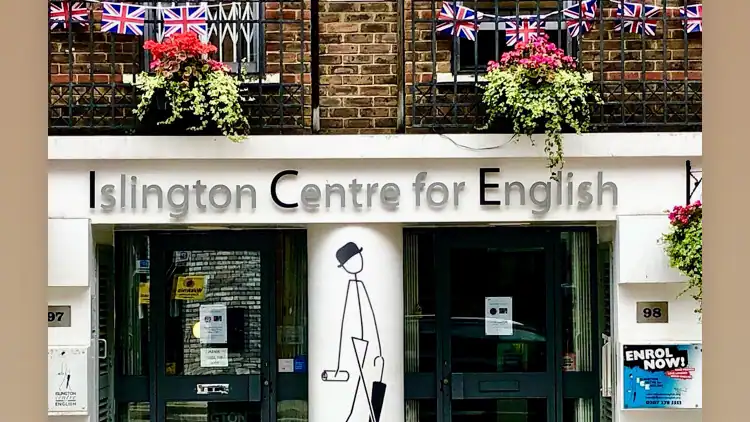
Every school here is accredited. Enquiries go straight to the school, with no commission and no middleman.












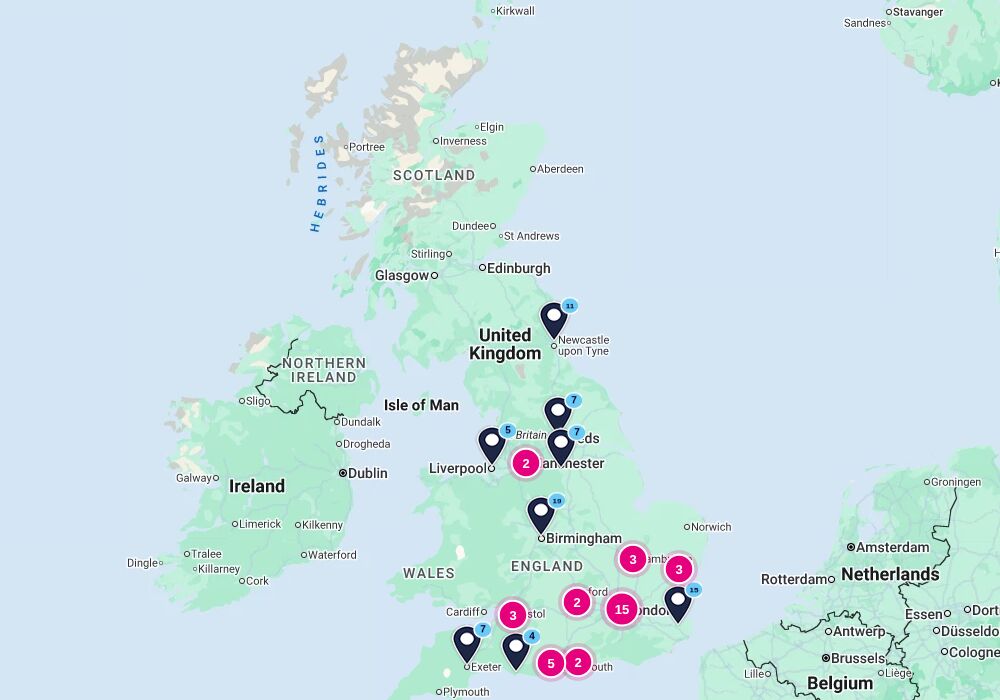
London schools on the map
Tap a school to see its courses and prices for your weeks.
Courses in London
Compare all 233Where to stay in London
Our sister companies can arrange it while you study.
 Live with a host familyHomestays from £210 a week
 Stay in a student residence
Student life and areas
Daily rhythm
A typical weekday starts with a 40 to 60 minute commute from Zones 3–4, then morning classes. Students often eat lunch near school or in a park and spend the afternoon studying or at a museum. In the evening you might go to a language exchange, a show, live music or a public lecture, depending on what you came to London for.
At weekends students explore other neighbourhoods and markets such as Borough, Portobello and Greenwich, or take the train to Oxford, Cambridge, Brighton or Canterbury, 60 to 90 minutes away.
Living areas
Most international students live in Zones 3–4, and some in the quieter parts of Zone 2. Zone 1 is mostly hotels and too expensive for a longer stay. Student residences, where a school offers them, are usually in Zones 1–2. They’re modern and convenient but cost £450–550+ per week. Most students choose a homestay or a private room in a residential area.
Read more
- Walthamstow/Leyton: Zone 3, north-east. Residential and multicultural, on the Victoria line.
- Balham/Tooting: Zones 3–4, south. Family streets on the Northern line, and good value.
- Wembley/Harrow: Zones 3–4, north-west. Quiet suburbs on the Metropolitan and Jubilee lines.
- Stratford/Forest Gate: Zone 3, east. Very good transport links and cheaper than most areas this close in.
Plan on 40 to 60 minutes each way from Zones 3–4. Almost every London student does it, and it costs far less than living centrally.


Practical realities
Budget
London is the UK’s most expensive city to study in, but course prices vary a lot. Tuition runs from around £100 to £500 per week, depending on the school, how many hours you take and how long you book. Longer bookings usually bring the weekly price down.
Read more
Accommodation is the biggest variable:
- Homestays: £200–350 per week, depending on the area, zone and meal plan. Some hosts charge extra in peak season, for special diets or for a private bathroom. More at londonhomestays.com.
- Student residences (Zones 1–2): often £450–550+ per week for an en-suite room or studio.
Other typical costs:
- Transport: £40–70 per week (Zones 1–3, Oyster or contactless with daily capping)
- Food (cooking for yourself): £40–60 per week
- A coffee: £3–4. A meal out: £12–20.
To compare schools fairly, ask each one for an itemised quote covering tuition, enrolment fee, materials and accommodation. If cost matters most, Manchester, Liverpool and Leeds work out roughly 40–50% cheaper overall.
Transport
You’ll use Transport for London (the Tube, buses and the Overground) every day. Pay with Oyster or contactless and the daily and weekly caps keep fares down. Rush hour is crowded but fine. Services run late, with the Night Tube on some lines at weekends and 24-hour night buses.
Getting around
The Tube is quickest, and buses let you see the city on the way. Most areas are well connected. Distances are long, so you won’t walk everywhere, and cycling is best left to riders who are confident in traffic.
Airports: Heathrow (40–60 minutes by Tube or Elizabeth line), Gatwick (30–45 minutes by train from Victoria or London Bridge), Stansted (50 minutes on the Stansted Express), Luton (30–40 minutes by train plus a shuttle bus).
Demand
London schools run all year and usually have places. July and August are the busiest months, and popular schools fill two to three months ahead for summer, so book early if you want a particular school or area.
Safety
London is generally safe if you take normal big-city care: keep an eye on your phone and bag on public transport and avoid empty streets late at night. Look up the area around your accommodation before you book. Night buses and the weekend Night Tube are reliable.
Visa support
Some accredited schools are licensed Student route sponsors, and many enrol students on visitor or short-term study routes. Check the latest guidance on GOV.UK and confirm the right visa route with your school.
Other cities
All cities

Thinking about London?
Tell us what you're looking for and we'll send your enquiry to schools that match. Free, with no obligation.