













When to Study English in London: Why Winter Might Be Your Best Bet UK Study English
Students usually ask us “When’s the best time to come to London?” expecting us to say summer.
We don’t. For most students, October through March is actually better. Here’s why that’s not as mad as it sounds.
London Works All Year (Unlike Beach Towns)
This is the fundamental difference between London and places like Bournemouth or Brighton. London is a major city where most activities happen indoors. Museums, galleries, theatres, restaurants – none of this stops because it’s cold or raining.
A beach town in winter? Unfortunately this can be a bit miserable. A major point of visiting the town vanishes when you can’t use the beach. Things to do in the rain can also be limited compared to bigger cities.
London in winter? Business as usual. The British Museum doesn’t close for weather. The West End keeps running. Cafés stay packed. Londoners don’t hibernate from November to March – they just wear more layers and get on with it.
You will too. Within a week, you’ll have figured out the right waterproof jacket and discovered that the tube is actually warmer than being outside.
Winter = Better Value
Many language schools charge more in summer, often as a high-season supplement, and some run offers between October and March. On a month-long course the difference adds up, so compare the same course for January and July in the Course Finder.
The savings add up properly: cheaper courses, a larger choice of accommodation, more offers on food and entertainment, cheaper everything because you’re not competing with peak tourist season pricing.
The money you save on course fees and accommodation can go on travel instead: a weekend in Edinburgh, or a few day trips out of London.
You’ll Actually Hear English
Central London in July is linguistically overwhelming. On the tube, in museums, in tourist areas – you’ll hear Spanish, Italian, French, German, Mandarin, Japanese, everything except much British English.
Winter changes this completely. Tourist numbers drop considerably. The people around you are mostly Londoners going about their normal lives, speaking English naturally.
Your host family becomes a much bigger part of your daily English practice when you’re not spending every evening out. You’re home for dinner more often, chatting over tea, watching British TV together, having actual conversations.
Your English can improve faster in winter than in summer. Partly that’s class composition, but partly it’s just exposure to more authentic English in daily life.
Class Composition Matters More Than You’d Think
In summer, many schools are busy with teenagers on two-week group programmes that mix lessons with holiday activities. That works well for them, but if you’re an adult improving your English for work, a class with a more social, holiday pace can be frustrating.
January through April attracts a completely different student. People taking career breaks to improve their English, university students doing serious semester-long programmes, professionals investing in language skills. The classroom atmosphere is more focused, teachers can move faster, and you’re surrounded by motivated adult learners.
Christmas in London Is Genuinely Special
If you time it right (arriving November or early December), you’ll experience something you absolutely cannot get in summer.
The Christmas lights on Oxford Street, Regent Street, Carnaby Street. Christmas markets everywhere – Hyde Park’s Winter Wonderland, Southbank Centre, Leicester Square. The whole city transforms. Your host family will likely include you in their Christmas traditions – decorating, carol services, maybe even Christmas dinner.
It’s distinctly British, and completely unavailable in summer.
But What About the Weather?
Right. Let’s be honest about this.
London winter is cold – typically 3–8°C. It rains fairly often. The sky is grey more than blue. Sunset is around 4pm in December. If you’re from somewhere sunny, this takes adjustment.
But it’s not Scandinavian winter. It rarely snows. It doesn’t stay below freezing for weeks. Just persistent damp cold that requires proper clothing.
And because you’re mostly indoors anyway – in class, on the tube, in museums, in cafés – you’re not actually outside battling the elements for hours. Short bursts walking between places.
Buy a good coat and dress in layers, and the cold is much easier to live with.
If grey skies make you properly miserable, maybe avoid November to February. But if you can handle it, the trade-offs are worth it.
When Winter Doesn’t Work
Look, some people legitimately need summer. Maybe you’re bringing your family to visit and they want decent weather for sightseeing. Or you’ve only got two weeks in July because of work constraints – you can’t exactly tell your boss you need winter off instead. If you know grey skies genuinely affect your mental health, don’t force it just to save money. Seasonal affective disorder is real, and your wellbeing matters more than the saving. And yes, maybe you specifically want that vibrant summer international student energy, the organised events, the larger community. All fair reasons to pay premium prices.
Summer’s Not Terrible, Just Expensive
We’re not saying don’t come in summer. Summer London has genuine advantages: longer days, outdoor events, rooftop bars, that warm-weather energy. Some people love that atmosphere and happily pay premium prices for it.
Just know what you’re paying for. Peak tourism, peak prices, less authentic English immersion. If those trade-offs are worth it for better weather, great. Go in with eyes open.
What About Spring and Autumn?
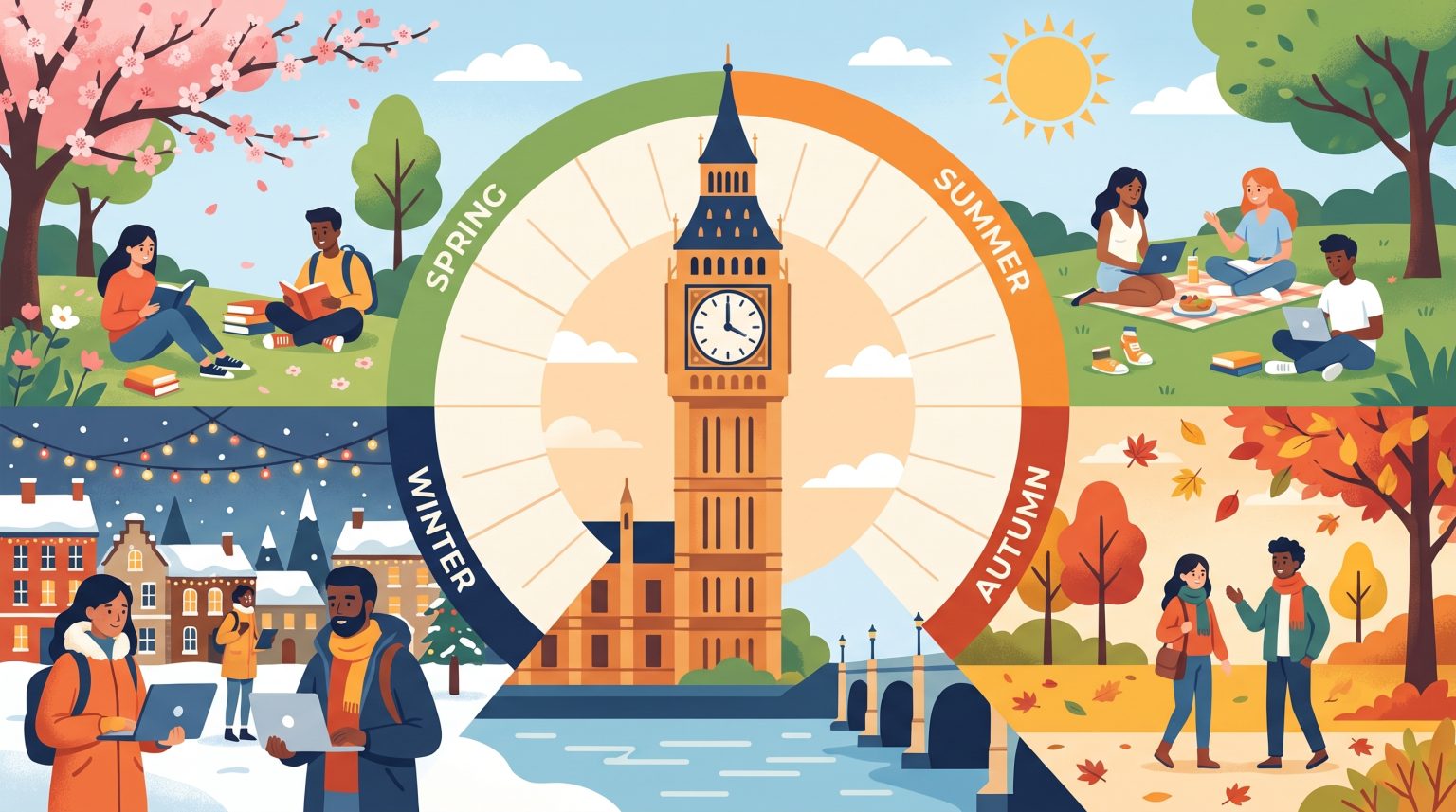
April–May and September–October offer a middle ground: better weather than deep winter, lower prices than peak summer, decent class composition. September is particularly good – some schools run end-of-summer offers, weather is often genuinely pleasant, and the city has a back-to-work energy that feels productive rather than touristy. April can be lovely too, though you’re gambling a bit more on weather.
Our take
Every season has trade-offs, and the right one depends on you.
Most adult learners serious about English improvement do best October through March. You get the best combination of value, class quality, and authentic immersion. If you’ve got flexibility in timing, September or April offer decent weather with moderate pricing – a solid middle ground.
But here’s the thing: know yourself. Some students arrive in February, save a lot and love it. Others arrive in January and struggle with the short, grey days. If grey weather really gets you down, the savings won’t feel worth it.
Questions About Timing Your London Study?
We can help you think through timing based on your specific situation – budget, weather tolerance, course goals, schedule constraints.
Email us at info@ukstudyenglish.com and tell us:
How long you’re planning to study
What matters most to you (value, weather, social scene)
Any constraints on timing
We’ll give you honest advice on when it makes sense for your situation – not just the standard “come in summer” answer.
Next up: Why Bournemouth only works in summer


